Fatigue Management
लेखक / Author: Devrati Clinic Editorial Team
प्रकाशित / Published:
यह लेख सामान्य patient education के लिए है। अपने लक्षणों के लिए उचित medical assessment लें।
Neurological Fatigue को बेहतर तरीके से कैसे Manage करें?
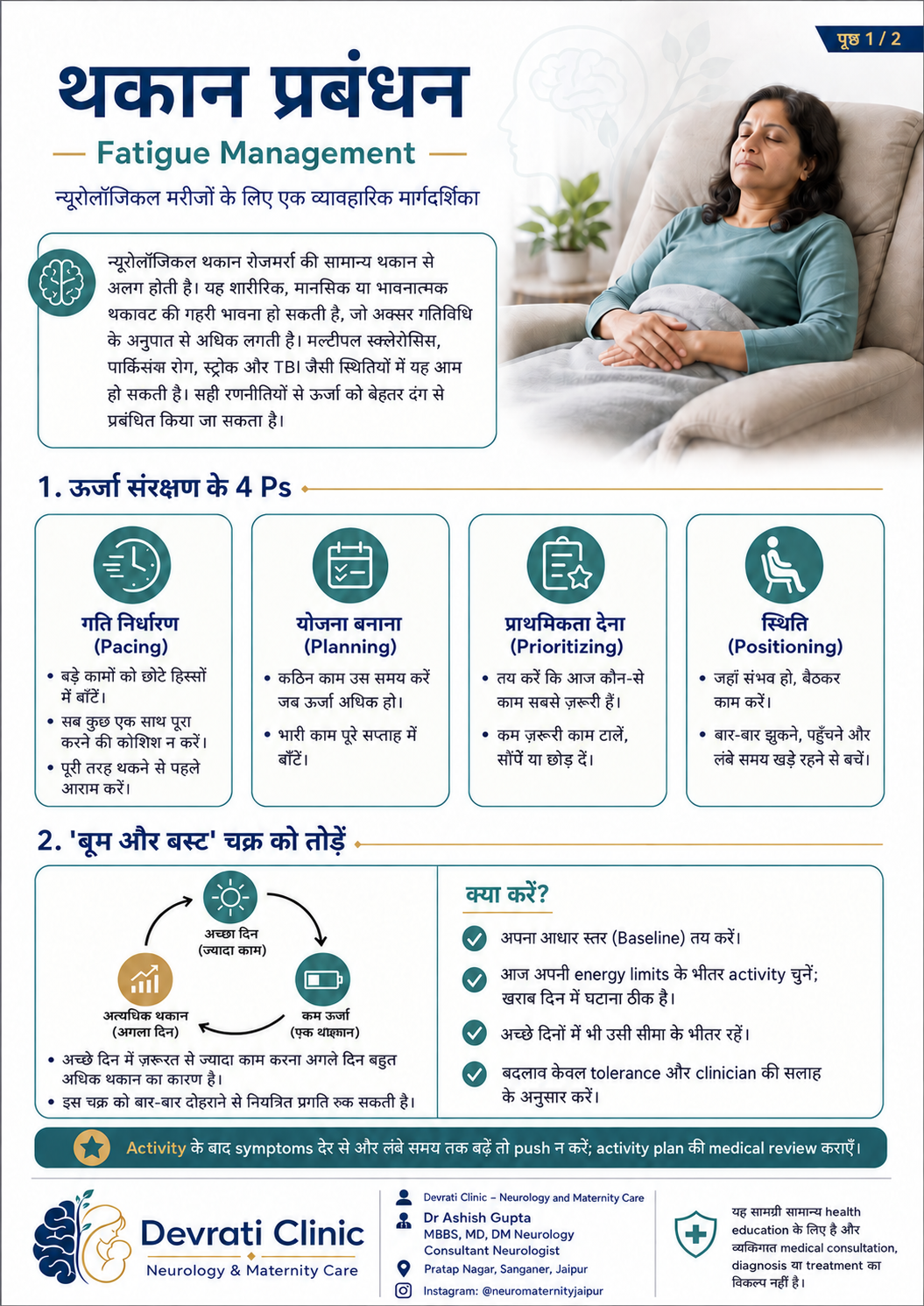
Fatigue केवल थक जाना नहीं है। Neurological fatigue में physical या mental exhaustion activity के अनुपात से अधिक लग सकती है और सामान्य rest से पूरी तरह ठीक नहीं होती।
यह stroke, multiple sclerosis, Parkinson's disease, traumatic brain injury और chronic pain conditions में देखी जा सकती है।
पहले समझें: Fatigue क्यों हो रही है?
Poor sleep, sleep apnoea, anaemia, thyroid disorder, infection, depression/anxiety, medicines, dehydration, poor nutrition और deconditioning contributors हो सकते हैं।
Energy Conservation के 4 Ps
Pacing, Planning, Prioritising और Positioning।
1. Pacing
Activity और rest को sustainable मात्रा में balance करें। यदि 40 minutes activity के बाद crash होता है तो shorter activity + planned break अधिक useful हो सकता है।
Boom-and-Bust Cycle
Good day पर overactivity → अगले दिन severe fatigue → बहुत rest → फिर overactivity। यह cycle predictable function रोक सकती है।
Baseline कैसे तय करें?
अपनी वर्तमान energy limits के भीतर activity चुनें; खराब दिनों में इसे घटाना ठीक है। बदलाव tolerance और clinician की सलाह के अनुसार करें। यदि physical या mental activity के बाद symptoms देर से और असामान्य रूप से बढ़ते हैं तथा recovery लंबी होती है, तो इसे केवल deconditioning न मानें। Post-exertional malaise की assessment कराएँ। ऐसी स्थिति में तय timetable के अनुसार activity बढ़ाना या symptoms के बावजूद push करना उचित नहीं है; activity अपनी energy limits और clinician की सलाह के अनुसार adjust करें।
2. Planning
High-energy tasks उस time रखें जब energy better होती है। Heavy activities पूरे सप्ताह में distribute करें।
3. Prioritising
आज क्या जरूरी है, क्या postpone/delegate/simplify हो सकता है—यह तय करें।
4. Positioning
कुछ tasks बैठकर करने, frequently used items easy reach में रखने और unnecessary bending/standing कम करने से energy बच सकती है।
Cognitive Fatigue
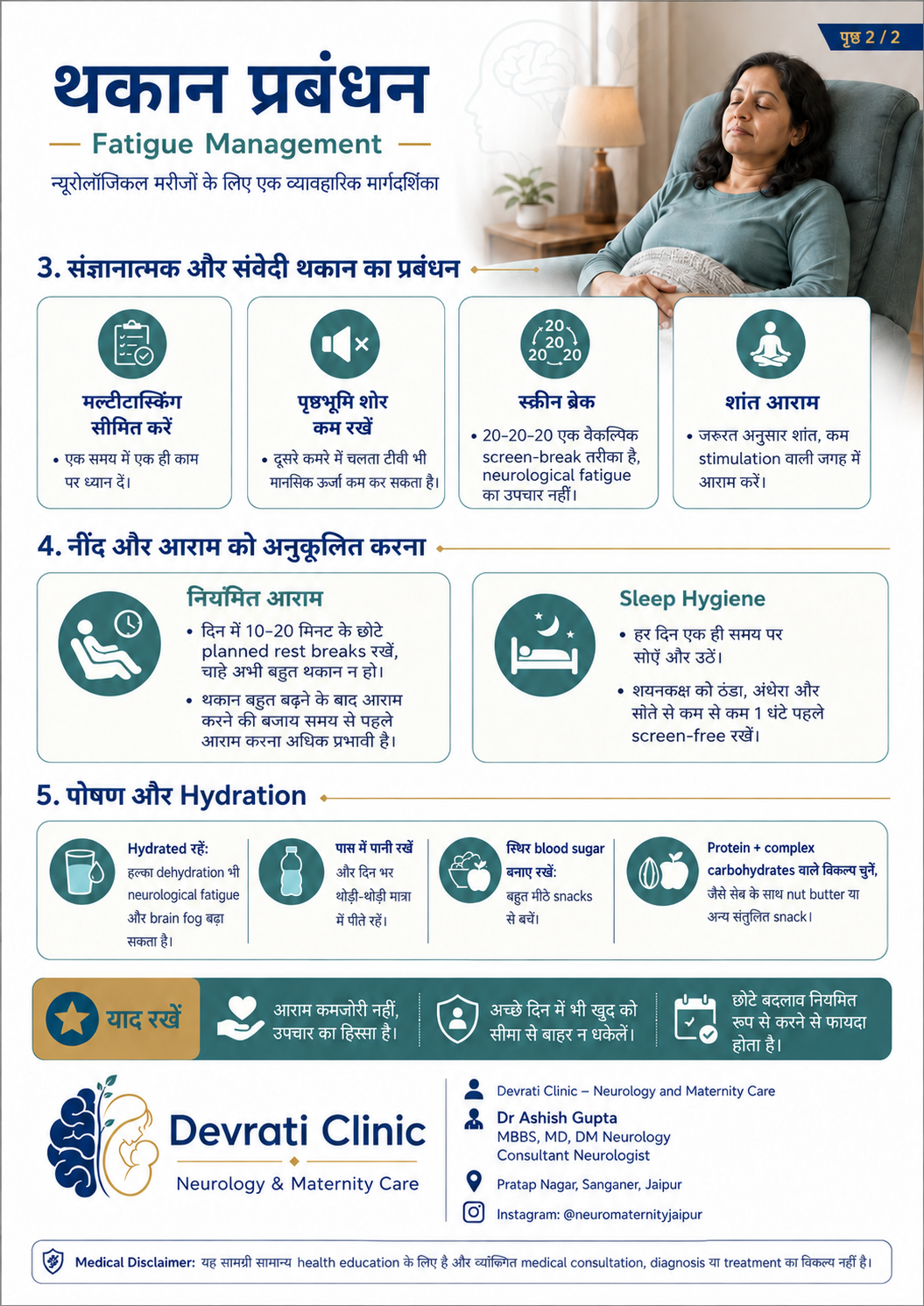
Reading, screen work, decision-making, conversation और multitasking भी exhausting हो सकते हैं। Single-tasking, low background noise, screen breaks और quiet recovery periods useful हो सकते हैं।
Rest कैसे करें?
Planned rest exhaustion से पहले रखें। पूरे दिन long naps लेने से night sleep और conditioning प्रभावित हो सकती है।
Sleep और Fatigue
Poor sleep fatigue worsen कर सकती है। Adequate sleep के बावजूद severe daytime fatigue हो तो sleep disorder consider करना चाहिए।
Nutrition और Hydration
दिन भर fluids लें, meal skipping avoid करें, balanced meals, adequate protein और complex carbohydrates रखें। हर fatigue के लिए special supplement जरूरी नहीं।
क्या Complete Rest अच्छा Treatment है?
Long-term excessive rest muscle deconditioning, reduced endurance और confidence loss बढ़ा सकता है। Goal sustainable activity है।
Exercise का Role
Appropriate regular exercise कई neurological conditions में beneficial हो सकती है। Low intensity, short duration और consistent schedule से शुरू करें।
Fatigue Diary रखें
Time, activity, duration, fatigue 1–10, rest और symptoms लिखें। इससे tiring activities, best energy periods और boom-bust pattern identify हो सकते हैं।
Doctor से कब बात करें?
नई, rapidly worsening या unexplained fatigue; fever/weight loss; breathlessness; severe daytime sleepiness; loud snoring; mood symptoms; या new neurological deficit में assessment लें।
याद रखें
Fatigue Management = Pacing + Planning + Prioritising + Positioning + sustainable activity।
इन्फोग्राफिक
Medical Disclaimer
यह सामग्री सामान्य health education के लिए है और व्यक्तिगत medical consultation, diagnosis या treatment का विकल्प नहीं है।
संदर्भ / References
Neurological illness के साथ बनी रहने वाली fatigue के लिए neurology follow-up की जानकारी देखें। Devrati Clinic, Pratap Nagar, Jaipur में Dr Ashish Gupta की profile व consultation timings से visit plan करें। अपनी activity, sleep और fatigue का record साथ लाएं।